


An Mpact laboratory study tested three foil-decorated paper and board samples mimicking a standard-mill recyclability evaluation. The result is encouraging for brands that want shelf appeal backed by evidence.
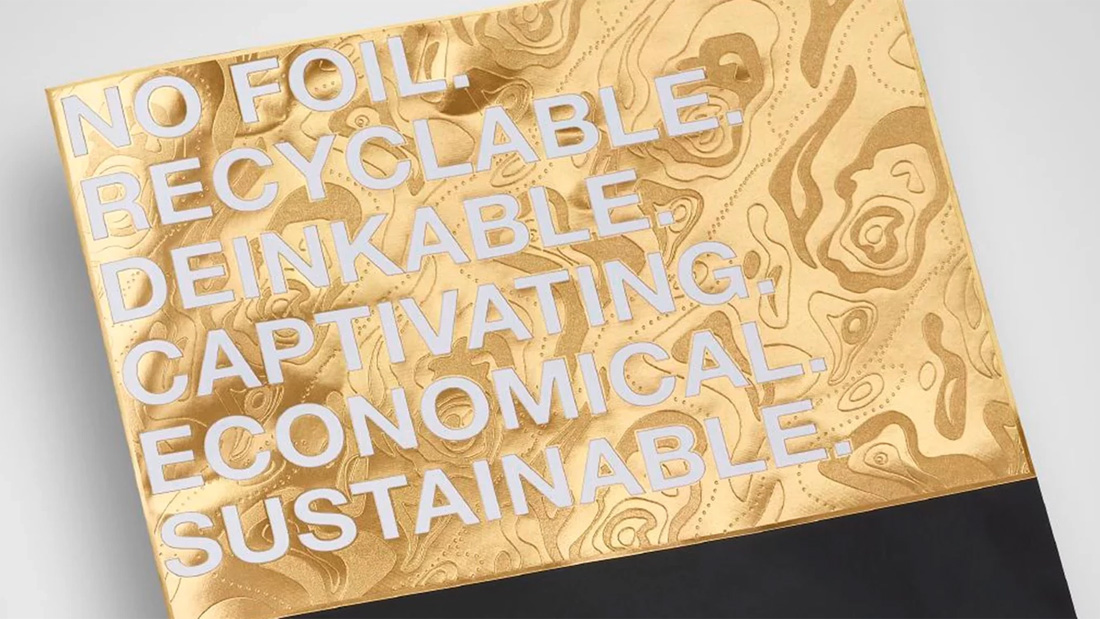
A dazzling finish has always earned attention. But what happens after the unboxing? Anything that shines on a package may be treated with suspicion by the sustainability minded. Metallic decoration can include metallised plastic laminates, metallise that cause recycling problems. Transfer foil is more refined. In the KURZ process supplied locally by Synchron Markings, the PET carrier is peeled away during application. What remains on the pack is an ultra-thin decorative layer, including aluminium measuring just 0.00002mm in the samples evaluated, with no plastic transferred to the finished packaging.
Three packs, three levels of shine
Mpact’s Innovation Laboratory in Springs evaluated three fibre-based packaging samples using the beta version of the CEPI 4Evergreen harmonised method. The method models important stages in a standard paper and board mill, including repulping, coarse and fine screening, handsheet formation, visual-impurity assessment and sheet-adhesion testing.
The samples covered a useful range of real-world applications: a local brand nougat sheet with 7% hot-transfer foil coverage; converted toothpaste packaging with 25% cold-transfer foil coverage; and converted hydrogel packaging with 63% cold-transfer foil coverage. In other words, this was not a polite test of one tiny accent. The most heavily decorated sample put well over half its surface into the conversation.
All three samples were assessed as suitable for standard-mill recycling
Each sample disintegrated into pulp slurry within the ten-minute test period. The measured fibre yields were 99.9% for the 7% sample, 99.8% for the 25% sample and 99.9% for the 63% sample. Under the method, all three received a yield score of 100 and were described as Best in Class for repulpability.
Handsheets were then tested for visual impurities and contained more than 100 small ink and metallised particles measuring less than 1 mm (Level 4). These particles are less important in an inner or filler ply than on a clean outer surface where the visual impurities would result in rejection. In South Africa, boards containing impurities are recycled as common mixed waste or industrial mixed waste and used in the inner layers of recycled board, posing no threat to upper layers.
Sheet adhesion produced another reassuring result. All three samples achieved Level 1, meaning the formed sheets separated cleanly from the support and cover without the adhesion problems that can disrupt mill production.
Then came the metal detector. Neither the original packaging nor the coarse- and fine-accept handsheets triggered it. According to the report, the transferred aluminium layer was simply too thin to register on the detector used.

The South African context explained
A European test result cannot be dropped into a South African waste stream and expected to behave itself. Collection, sorting and mill infrastructure differ. The Mpact report adds local value-chain context: foil-decorated fibre packaging is currently collected and sorted into common mixed waste or industrial mixed waste grades, and local sorting does not separate packs according to the percentage or type of metallic decoration.
Most foil-decorated packs in the local stream have relatively modest coverage, similar to the 7% and 25% samples, while almost fully covered packs are not encountered in large volumes. South Africa’s more manual sorting environment also means the underlying paper or board can remain recognisable as fibre-based, an important distinction from sensor-heavy systems where a metallic surface may interfere with near-infrared recognition.
Packaging is recycled in a particular collection system, through a particular sorting process, and at a particular mill.
Better design starts with the whole pack
The study gives brand owners, designers and converters a sound reason to continue exploring hot- and cold-transfer decoration on fibre-based packaging. It also makes one point unmistakable: the full construction counts. Changes to the board, adhesive, coating, ink, varnish, label, or product contamination can affect the result, which is why individual packaging formats should be assessed on their own merits.
Responsible packaging design lives in the details: choose a suitable fibre substrate, use decoration intelligently, evaluate the complete pack and make claims that the evidence can carry.
The proof behind the polish
For Synchron Markings, this study strengthens an approach that brings aesthetics and material responsibility into the same design conversation. Across hot transfer, cold transfer, and foil coverage ranging from 7% to 63%, the tested packs retained extremely high fibre yields, showed no sheet-adhesion problems, did not trigger metal detection, and achieved the same standard mill recyclability score.
Beautiful packaging still has a job to do on the shelf. But now it can present itself with better questions, better evidence and a clearer view of what comes next.
Make your next pack brilliant and better informed. Speak to Synchron Markings about KURZ’s hot and cold transfer solutions, responsible material choices and application support. You can contact us at cs@synchron.co.za.
Related Posts
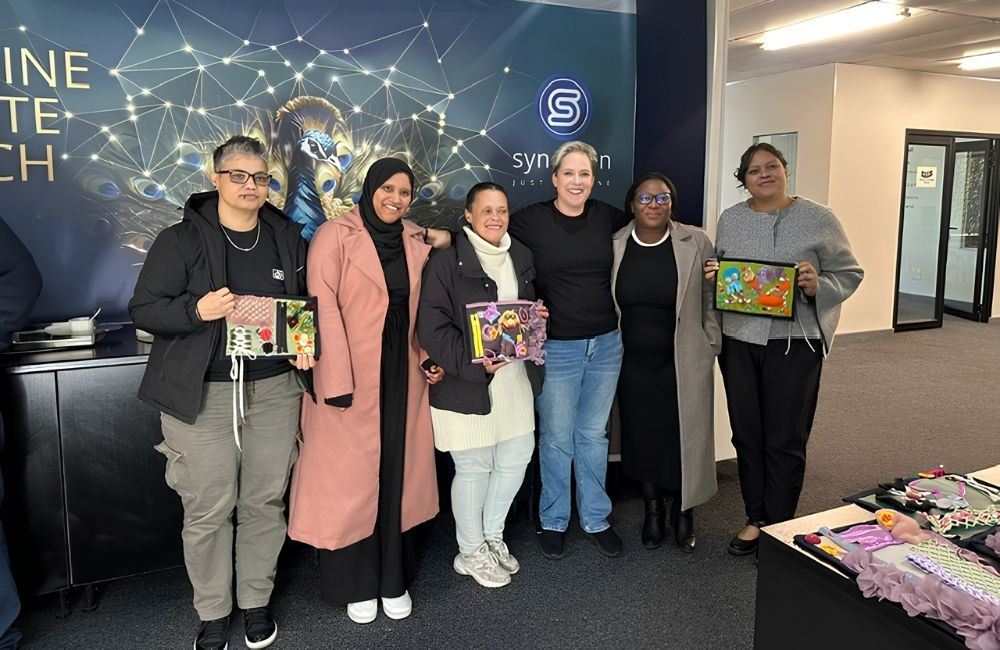
For Mandela Day, the Synchron team turned familiar fabrics into thoughtfully designed sensory blankets, combining creativity, expert guidance and community care. Together with donations of food and clothing, the handmade blankets supported three local organisations and showed how everyday resources can make a meaningful difference.
Mpact laboratory testing provides encouraging evidence for brands considering decorative transfer foil on fibre-based packaging. Three KURZ hot- and cold-transfer foil samples achieved exceptionally high fibre yields and were assessed as suitable for standard-mill recycling, supporting more informed and responsible packaging design.

Once upon a time, a truck curtain was mainly expected to keep cargo covered, protected from the weather and easy to access during loading and unloading. That has changed…
