


In the world of packaging, labels, books and commercial artwork, choosing the right finishing technique is crucial. From cardboard to plastic films and bookbinding materials, each substrate demands a tailored approach. One technique that stands out for its versatility and impact is foiling. In this article, we’ll explore the possibilities of finishing in the graphics industry, focusing on the various applications and the layers that make up foils.
Finishing options in the graphics industry
- Printing
– Offset, letterpress, gravure, flexo, digital printing
– Utilising UV Inks or conventional inks
- Varnishing
– Employing on-sheet varnishing machines, full or partial surfacing
– Utilising UV- or water-based dispersions
- Calendaring
– Utilising heated, polished drums to achieve high gloss finishes
– Enhanced by special varnishes for optimal effect
- Laminating
– Incorporating materials like PET, OPP, PE, PVC, acetate, in glossy or matte finishes
- Hot Stamping
- Cold Foil Transfer
- Die Cutting
- Folding
- Glueing

Stamping foils: Shades & designs by KURZ
KURZ, a frontrunner in foiling technology, offers an extensive range of foils, including:
- LIGHT LINE®: Featuring diffractive endless patterns and laser foils in metallic shades like silver, gold, transparent, and special colours.
- LUXOR® / ALUFIN®: Showcasing aluminium-metallised foils with high gloss, satin gloss, matte, super matte and metallic finishes.
- COLORIT®: Providing pigmented foils in matte, high gloss transparent or black, with an option for pearl gloss.

Relevant applications for graphics
- Cardboard: Applied in cosmetics (perfumes, razor blades, oral and hair care), cigarette cartons, sweets, chocolates packaging, DVD covers and food packaging.
- Labels and self-adhesive labels: Widely used in wine and spirits, cosmetics and wrapping paper.
- Greeting cards
- Paper book covers
- Flexible plastic materials
- General advertising/Commercial artwork: Utilised in writing paper, calendars, business cards, displays, advertising materials and magazines.
- Bookbinding industry: Deployed in bibles, encyclopaedias and diaries for edge gliding.

Understanding foil functionality
Foiling has different layers to it for different functions and each layer plays its part. The foundation layer ensures precise and uniform processing across the entire surface. It also facilitates overprinting, resists wear and enhances the stamping effect. The next layer brings colour vibrancy and shields against physical and chemical stress as well as defining and releasing the foil, intensifying its shine and securing adhesion. These layers help employ a high-quality aluminium base for a stunning mirrored finish.
Foiling emerges as a versatile and impactful finishing technique within the graphics industry. By understanding its applications, variations and the composition of foils, printers and designers can harness its potential to elevate their projects. Whether enhancing packaging or creating eye-catching labels, foiling offers a world of possibilities for creating visually stunning and sophisticated designs. Mastering the art of foiling opens up new realms of creativity and innovation for professionals in the printing industry.
© Synchron Fabrics & Foils, September 2023
Related Posts
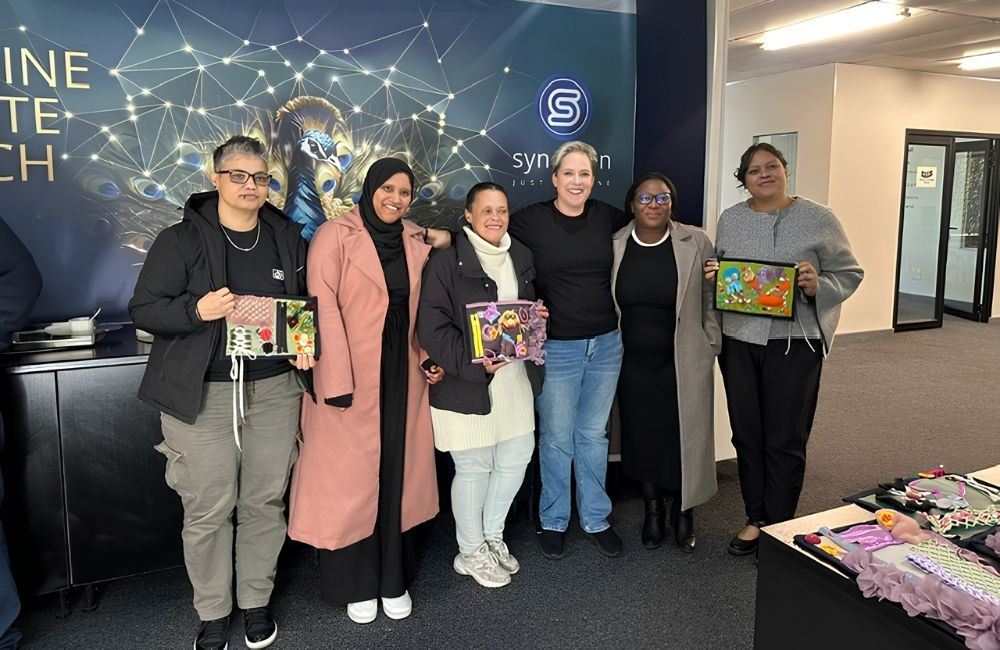
For Mandela Day, the Synchron team turned familiar fabrics into thoughtfully designed sensory blankets, combining creativity, expert guidance and community care. Together with donations of food and clothing, the handmade blankets supported three local organisations and showed how everyday resources can make a meaningful difference.

Mpact laboratory testing provides encouraging evidence for brands considering decorative transfer foil on fibre-based packaging. Three KURZ hot- and cold-transfer foil samples achieved exceptionally high fibre yields and were assessed as suitable for standard-mill recycling, supporting more informed and responsible packaging design.

Once upon a time, a truck curtain was mainly expected to keep cargo covered, protected from the weather and easy to access during loading and unloading. That has changed…
