


At the close of each year, LEONHARD KURZ makes a statement that goes beyond a seasonal greeting. Known globally as the market leader in thin-film technology and surface embellishment, KURZ continues to push creative and technical boundaries while remaining firmly rooted in the traditions that define its corporate values.
Two of these traditions, the annual New Year’s greeting card and the iconic wall calendar, have become much-anticipated highlights. They are not only visual showcases, but tactile experiences that demonstrate what is possible when innovation, craftsmanship and artistic collaboration come together.
Innovation built on tradition
KURZ remains committed to looking forward, expanding business areas, and bringing new decoration technologies to the market. This drive to innovate is anchored by a strong foundation of tradition, providing the stability needed to explore new creative territory. The greeting card is a perfect example of this balance. Each year, it becomes a canvas for experimentation, artistic interpretation and technical excellence, which is a tradition KURZ continues.

An artistic vision brought to life
The motif for the 2025 greeting card was created by Fürth-based artist Inge Gutbrod, whose work explores the delicate boundaries between transparency, translucency and opacity. Using wax as her primary medium, Gutbrod creates objects and installations that invite sensory engagement, where light, colour, material and form interact to create atmospheric depth.
Translating this artistic language into a printed, three-dimensional object required both creative sensitivity and technical precision. The result is a greeting card that functions as a miniature work of art, one that can be folded, handled and experienced from multiple perspectives.
The making of a three-dimensional masterpiece
The production of the 2025 greeting card involved a carefully orchestrated, multi-step finishing process:
- 4/4 colour offset printing laid the foundation for the visual composition.
- The frame was enhanced with micro-embossing in LUXOR® 317 Burgundy MTS, using a precision stamp from KURZ subsidiary Hinderer + Mühlich (H+M).
- The wax tiles were developed through several embossing stages. A first pass applied 3 TRUSTSEAL® Lenses in Orange 109 using single-image embossing.
- Additional tiles were finished with LUMAFIN® 799 Clear MS and LUMAFIN® 719 MS Yellow as flat embossing.
- Finally, blind embossing was applied across the entire surface, adding depth, texture and a refined tactile finish.
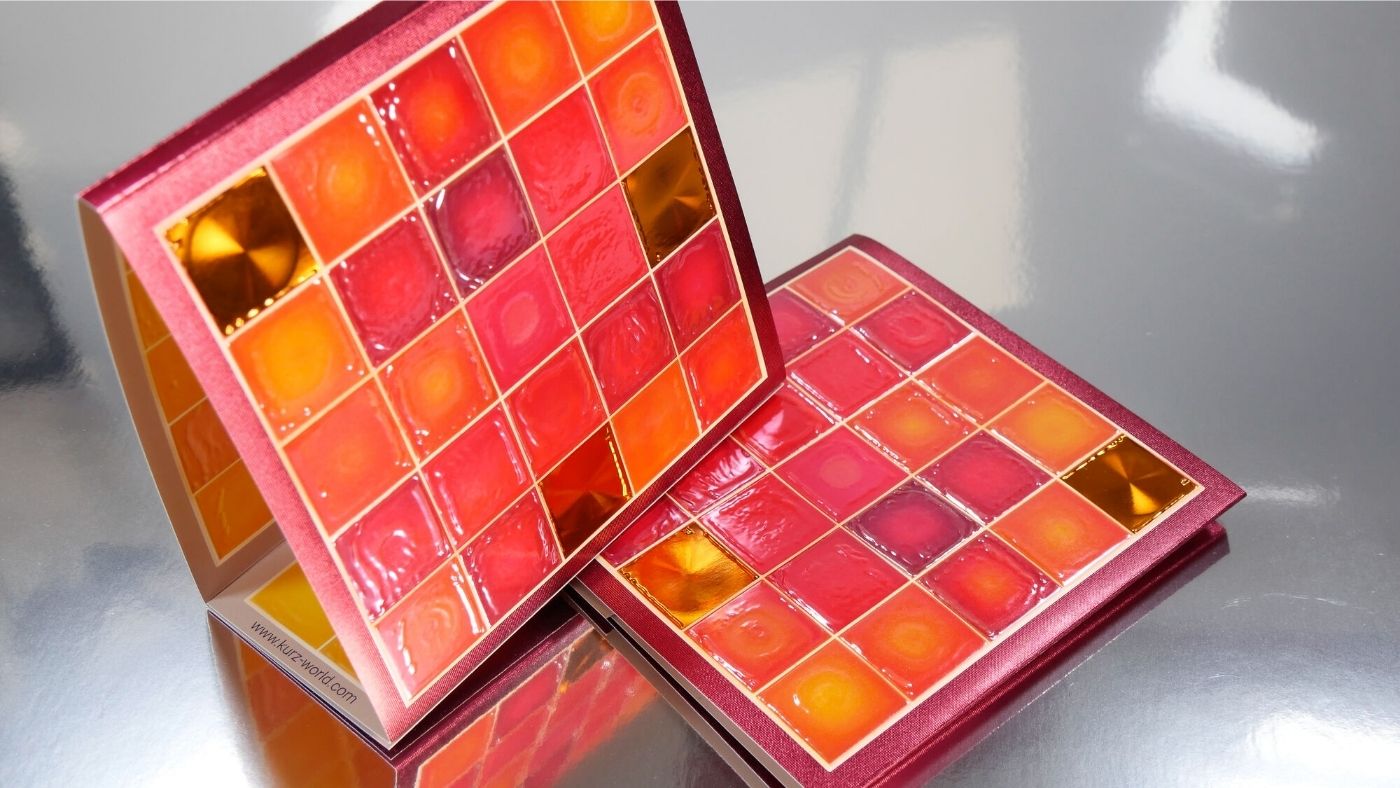
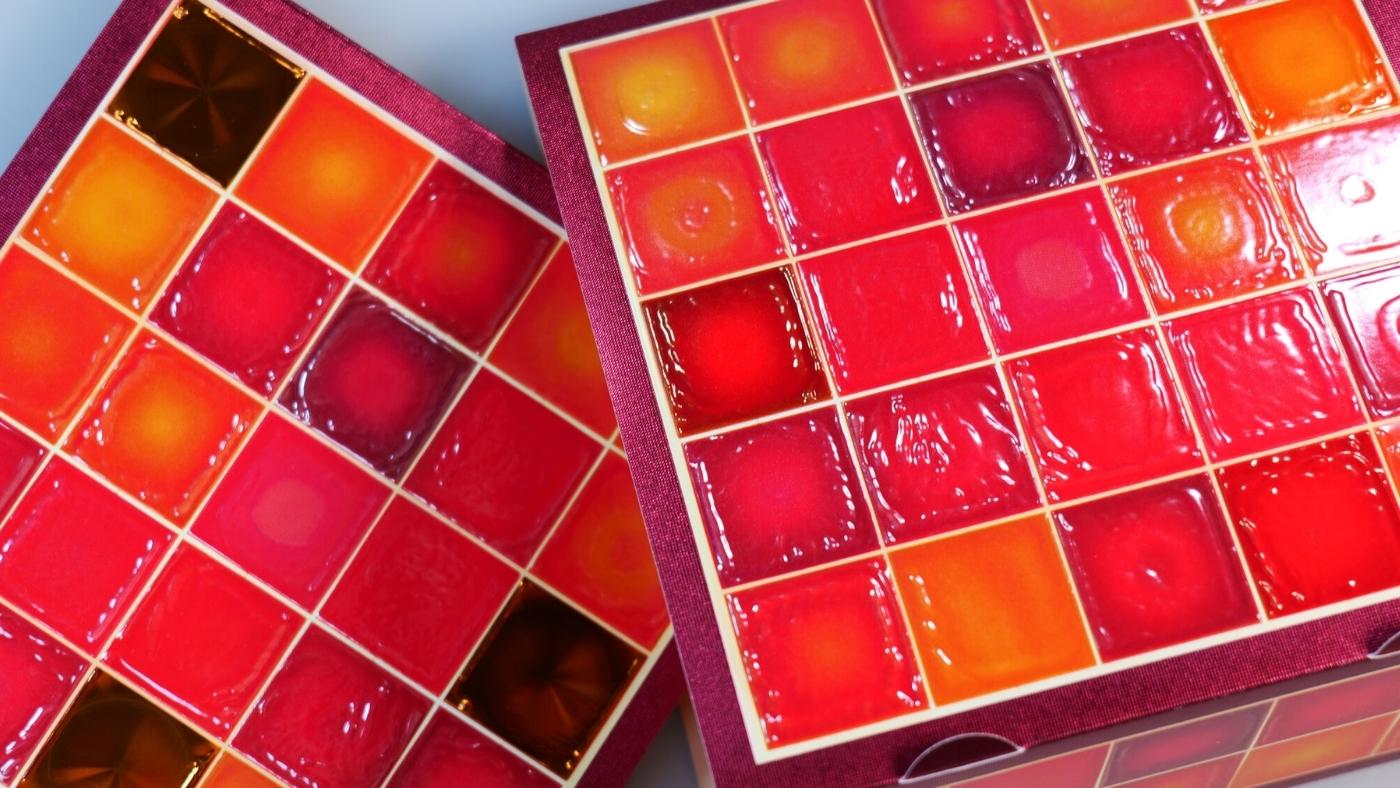
Each step contributed to the transformation of Gutbrod’s original artwork into a layered, three-dimensional object that engages both sight and touch.
The finished greeting card is more than a message, it’s a demonstration of what modern surface embellishment can achieve. By combining artistic expression with cutting-edge finishing technologies, KURZ once again showcased its expertise while reinforcing the importance of craftsmanship, creativity and innovation.
Have a look at our Design Inspiration page for more examples of creative surface embellishment and finishing possibilities.
Related Posts
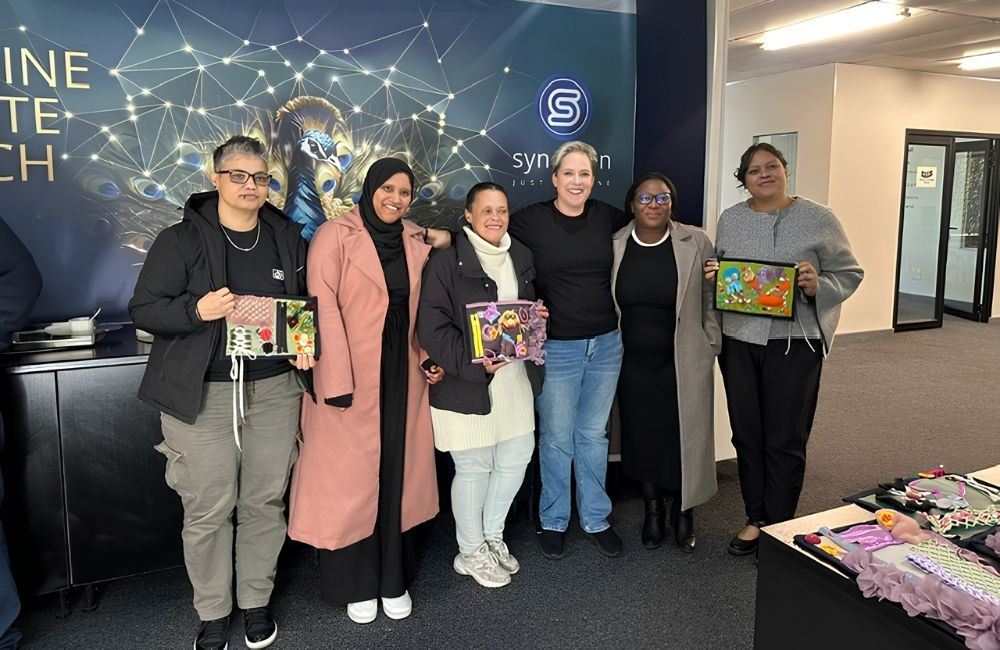
For Mandela Day, the Synchron team turned familiar fabrics into thoughtfully designed sensory blankets, combining creativity, expert guidance and community care. Together with donations of food and clothing, the handmade blankets supported three local organisations and showed how everyday resources can make a meaningful difference.

Mpact laboratory testing provides encouraging evidence for brands considering decorative transfer foil on fibre-based packaging. Three KURZ hot- and cold-transfer foil samples achieved exceptionally high fibre yields and were assessed as suitable for standard-mill recycling, supporting more informed and responsible packaging design.

Once upon a time, a truck curtain was mainly expected to keep cargo covered, protected from the weather and easy to access during loading and unloading. That has changed…
