


In a world where brands clamour for attention, print and packaging become battlegrounds of creativity. Enter the transformative power of embellishment enhancements – where foiling and embossing ignite brands with an irresistible allure.
As the conduit for Leonard KURZ’s innovations in South Africa, Synchron Markings embarks on a journey to explore the evolving landscape of foiling and embossing – techniques that have transcended mere aesthetics to become indispensable elements of brand storytelling and consumer engagement.

Sales and marketing manager Phumzile Dlamini shares insights into the dynamic world of embellishment enhancements and the transformative impact they bring to print and packaging. ‘Advancements in both digital and conventional technologies have revolutionised foiling and embossing processes, offering unprecedented precision, speed and creative possibilities,’ she comments.
Digital printing technologies, exemplified by the DM- MAXLINER 3D machine, have shattered conventional barriers by enabling intricate foiling effects without the constraints of traditional dies. ‘This high-speed printing marvel not only enhances design flexibility, it also maximises efficiency, catering to diverse printing needs with minimal set-up times,’ Phumzile explains.

Conventional foiling and embossing machines have also witnessed remarkable improvements, with innovations such as sheet-fed cold foiling technology paving the way for efficient and captivating metallised finishes. According to Phumzile, these advancements elevate the aesthetic appeal of printed materials and optimise production processes, reducing waste and enhancing overall efficiency.
Embellishment Enhancements
In a landscape shaped by evolving consumer preferences and market dynamics, the demand for embellishment enhancements has soared. Consumers seek brands that offer superior quality as well as unique and engaging experiences. Phumzile believes that foiling and embossing techniques serve as tangible expressions of brand identity, fostering connections and loyalty among consumers. ‘As brands harness these enhancements to tell compelling stories and create immersive packaging designs, they carve out a distinct niche in the competitive market.’

Challenges and opportunities
Despite the transformative potential of foiling and embossing, print service providers (PSPs) face various challenges in integrating these techniques into their operations. Phumzile says high initial investment costs, coupled with the need to justify these expenses in a competitive market, pose significant hurdles for PSPs. ‘However, strategic partnerships and a focus on return on investment can mitigate these challenges, paving the way for long-term growth and success.’
Phumzile cites ECOFIN as a groundbreaking decoration developed by KURZ. ‘It stands out for its remarkable printing results achieved on a thinner transfer carrier: 6μm compared to the conventional 12μm. This advancement reduces the need for PET material while maintaining the same print quality for sheets or labels,’ Phumzile remarks. ‘Additionally, ECOFIN CWO slim offers economic benefits and contributes to a lower carbon footprint by utilising fewer raw materials, reducing weight and volume in logistics and facilitating the use of longer rolls.’

She believes that hot stamping remains the premier solution for achieving superior surface decoration in the graphics industry. ‘With the unparalleled ability to handle rough surfaces and tactile designs, hot stamping ensures exceptional durability and brilliance. With hot stamping, the design possibilities are virtually limitless, offering a wide array of colours and tactile effects to captivate customers.’ This method enables precise, long-lasting and high-quality refinement of various substrates, including blank or printed cardboards, papers, laminated surfaces and other challenging materials, making decoration more economical and accessible.
This article was originally published in Packaging & Print Media
© Synchron Fabrics & Foils, August 2024
Related Posts
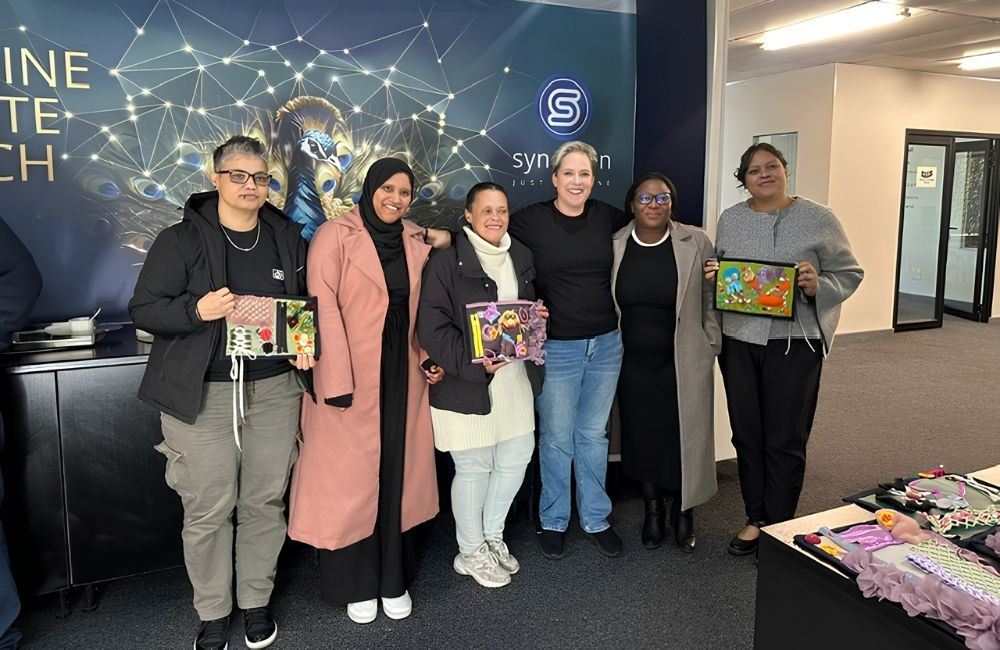
For Mandela Day, the Synchron team turned familiar fabrics into thoughtfully designed sensory blankets, combining creativity, expert guidance and community care. Together with donations of food and clothing, the handmade blankets supported three local organisations and showed how everyday resources can make a meaningful difference.

Mpact laboratory testing provides encouraging evidence for brands considering decorative transfer foil on fibre-based packaging. Three KURZ hot- and cold-transfer foil samples achieved exceptionally high fibre yields and were assessed as suitable for standard-mill recycling, supporting more informed and responsible packaging design.

Once upon a time, a truck curtain was mainly expected to keep cargo covered, protected from the weather and easy to access during loading and unloading. That has changed…
